Why People Who Text Constantly Still Don't Feel Close

Over the past five years, we've been asking people a simple question: does using Marco Polo (instead of texting) actually help people feel closer?
Over the past five years, we've been asking people a simple question: does using Marco Polo (instead of texting) actually help people feel closer?
We recruited hundreds of people who were already in close relationships — friends who text constantly, siblings in different cities, parents and adult children staying connected. We asked them to replace their texting with Marco Polo for two weeks. No scheduling required, just record and watch whenever.
Here's what happened.
Before the study started, we asked people about their relationships. The responses were surprisingly consistent:
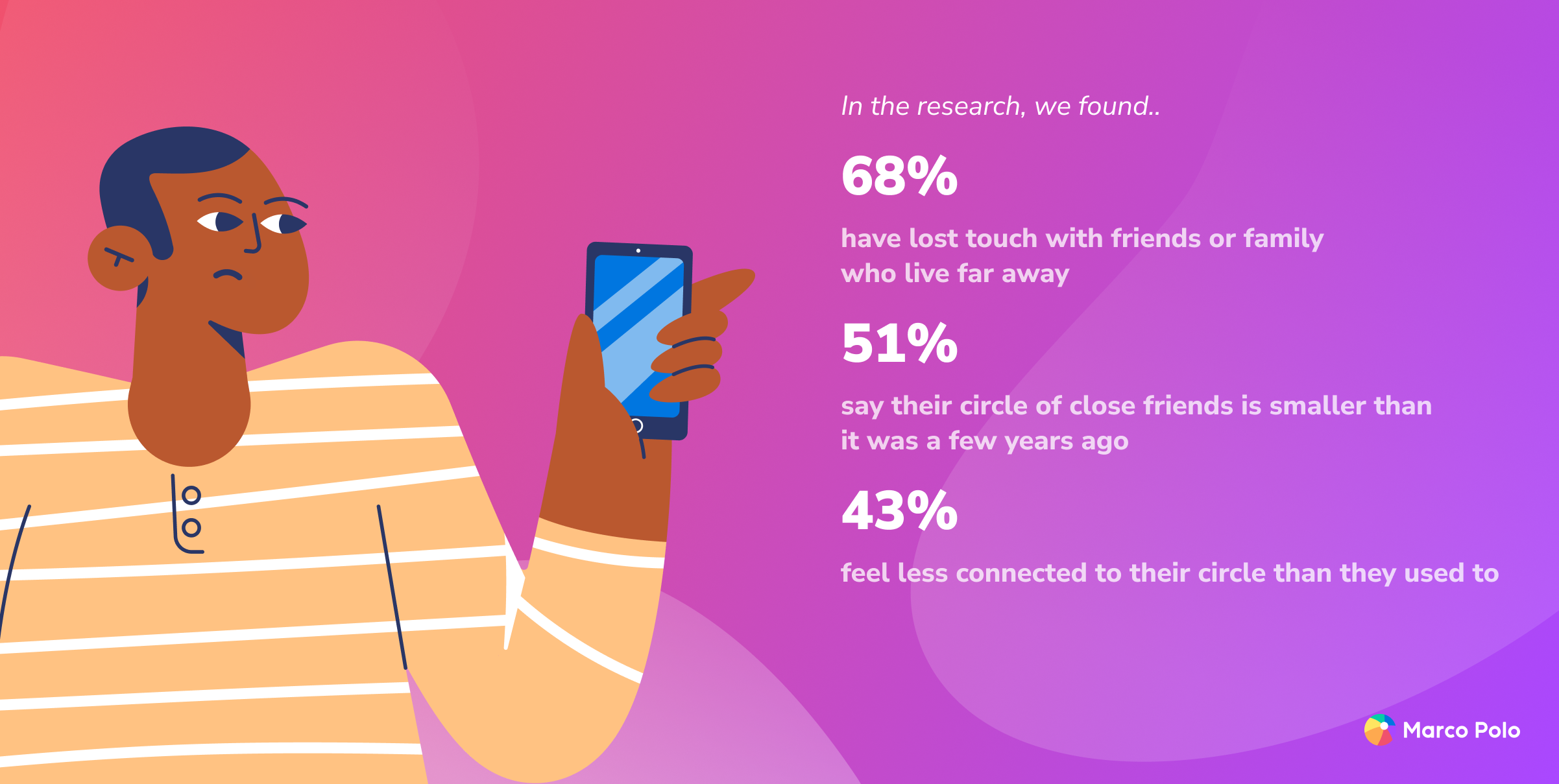
The gap that stood out most: only 11% said they feel "extremely close" to their friends and family, while 46% said that's how close they want to feel.
Most people described this like it's just how things are now. Friends move. Life gets busy. You drift apart. That's normal, right?
As one person put it: "We text constantly but never actually SEE each other."
But it doesn't have to be.
We also asked about communication preferences. Video was rated as the most emotionally connecting form of remote communication — ahead of texting, phone calls, and everything else.
But when we asked how often people actually use video, the numbers dropped off. The reasons were predictable:
So people default to texting. And texting doesn't really feel like staying close.
Across all five years of studies, we found the same pattern:
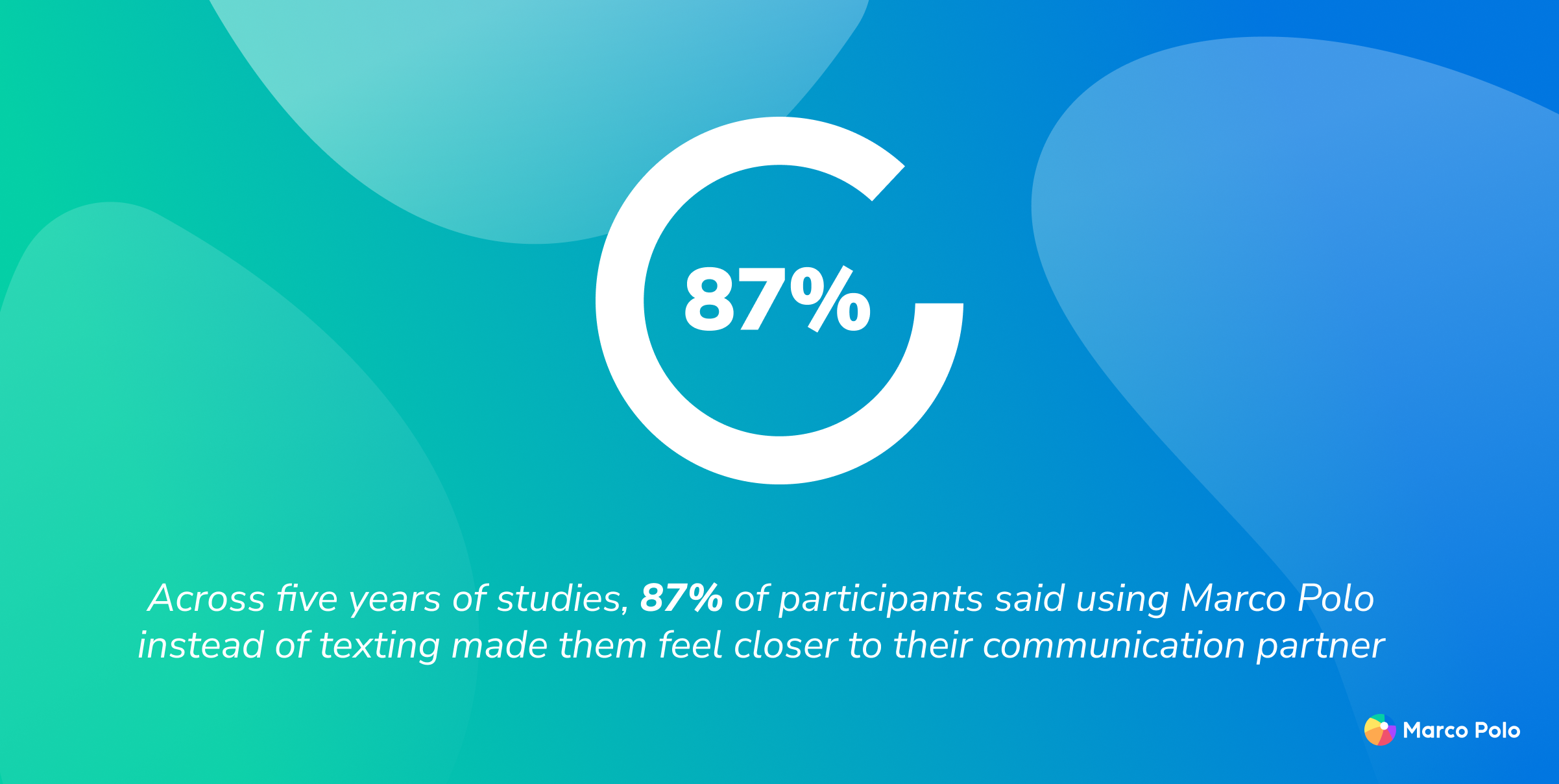
87% of participants said using Marco Polo instead of texting made them feel closer to their communication partner.
This shift wasn't immediate. The first few days involved some awkwardness — getting used to being on video, figuring out when to record. But after about a week, something clicked. People consistently told us they appreciated the closeness Marco Polo created compared to other ways of staying in touch. By the end of two weeks, over half said they planned to keep using it.
Beyond feeling closer, participants reported better moods while using Marco Polo compared to their baseline throughout the day. And when we looked at the aggregate results, satisfaction with communication nearly doubled (from 23.5% rating it at the highest level to 43.7%).
Most people assume being on video would be more stressful than texting. You have to think about how you look, where you are, whether you're presentable.
But participants consistently reported the opposite: Marco Polo created less anxiety than texting.
When asked about waiting for responses:
Why? Several people explained it in their video responses:
"You don't have to guess the emotion... You're not guessing or feeling anxious about it."
"It's video which feels more intimate but also like a text message where you can send or watch asynchronously."
"It was easier to fit into our schedule and also made us feel more connected than purely text-based communication."
People also reported feeling better while using Marco Polo than during their typical day. The difference wasn't dramatic, but it was consistent starting about a week in.
There's another factor people kept mentioning: you see the real context of someone's life. Their messy kitchen. Their dog wandering through the frame. Their kid interrupting. The pile of laundry in the background. Instead of making people self-conscious, this environmental context made them feel more connected. You weren't just hearing what someone was saying — you were seeing their actual life. You can just be yourself in your own space, whatever your day looks like, and send that to someone on your own time.
Texting, by contrast, carries its own pressures. You reduce complex feelings to "iykyk" or pick the right emoji. You craft the message. There are read receipts, double-text anxiety, the "sorry for the delay!" apology economy. With Marco Polo, you can see tone and intention immediately. No guessing whether someone is upset or just busy.
The research showed clear patterns about when Marco Polo worked best:
Long-distance relationships
"My sister moved away and we barely talk" was a common trigger for trying it.
Busy schedules that don't align
As multiple people said: "We keep trying to FaceTime but it never works out."
People who were drifting apart
"I miss actually seeing my friends" — and being able to show them things, not just describe them. People mentioned showing garden updates, giving office tours, sharing reactions to good news in real time.
One participant said: "We talked more in these two weeks than we had in months using any other method."
This wasn't a one-time study. We've run this same methodology five times between 2020 and 2025:
The pattern held across all five years: people consistently felt closer, reported higher satisfaction, and said they'd continue using it after the study ended.
If you have someone you care about who you text a lot but rarely actually see or talk to, using Marco Polo instead will probably make you feel closer to them.
It works because:
It's not a replacement for everything. You'll still text for quick logistics. You'll still do live calls when you need real-time decisions.
But for staying connected to people you care about when life gets busy and you're in different places, the research shows it makes a measurable difference.